The Art of Narrative: Why Storytelling is the Future of Apparel Design
At Rabia Dastgir Design Consultants (RDDC), we believe apparel design should go beyond trends. It should embody the soul of a brand and create lasting resonance with consumers who crave meaning, not just aesthetics.
Why Storytelling Matters in Apparel Design
1. Emotional Connection
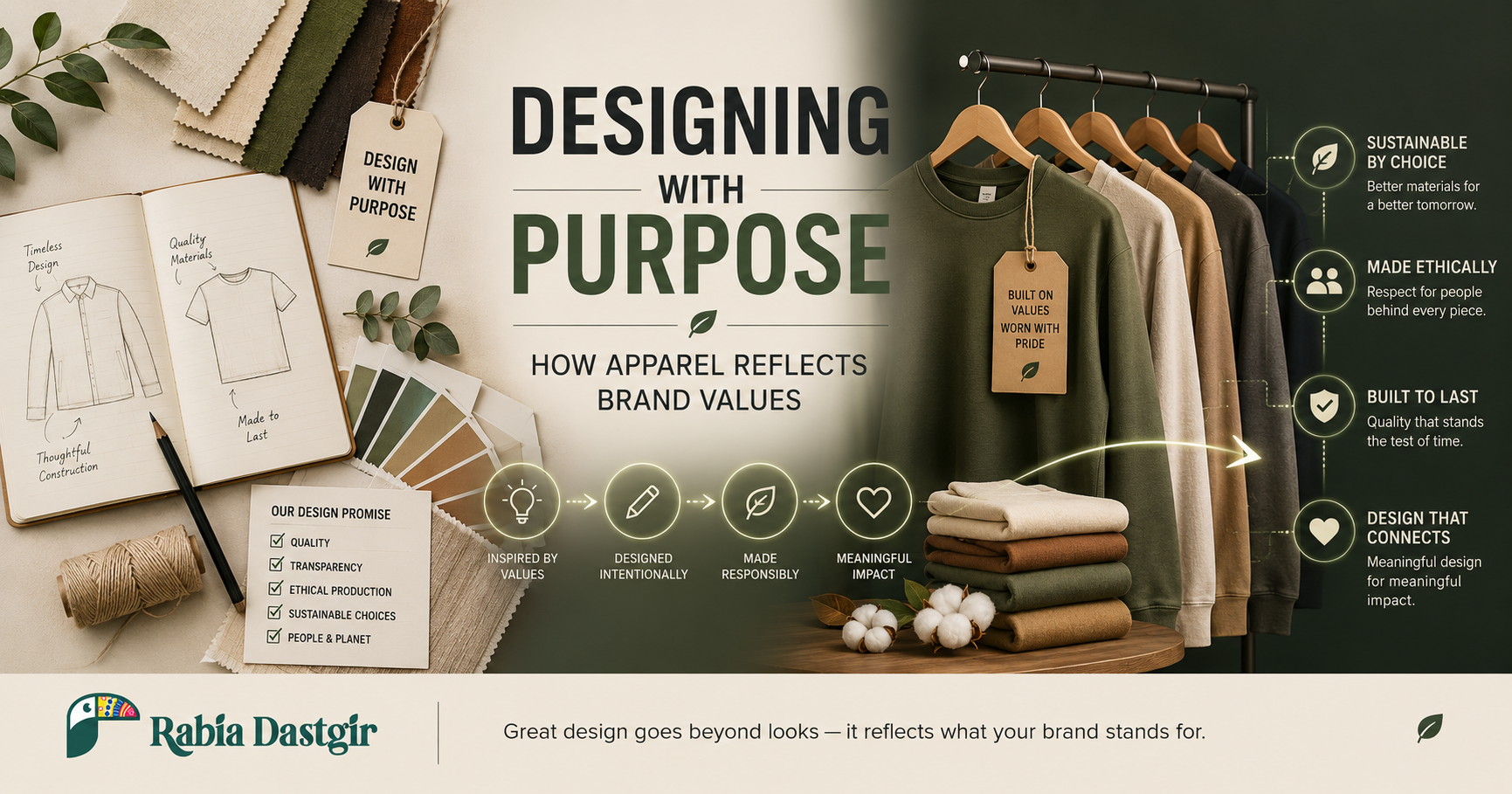
A product without a story is forgettable. Consumers are more likely to connect with garments that carry a narrative — whether it’s “crafted from organic cotton grown by small farmers” or “inspired by indigenous patterns honoring cultural heritage.”
2. Differentiation in a Crowded Market
Thousands of brands compete for attention. Storytelling gives apparel uniqueness. For example, Levi’s reinforces its heritage through stories of durability, while Allbirds highlights sustainability narratives around eco-materials.
3. Loyalty and Community Building
When consumers connect with a story, they become advocates. Apparel that reflects shared values creates communities, not just customers.
Elements of Storytelling in Apparel Design
Inspiration and Concept: Designers must root collections in strong narratives — cultural movements, sustainability missions, or social causes. A line inspired by “the resilience of women entrepreneurs” is more meaningful than a generic “spring collection.”
Materials as a Narrative Tool: Fabric choices are storytelling devices. Hemp or bamboo fabrics convey sustainability, while luxury silks and cashmeres communicate exclusivity.
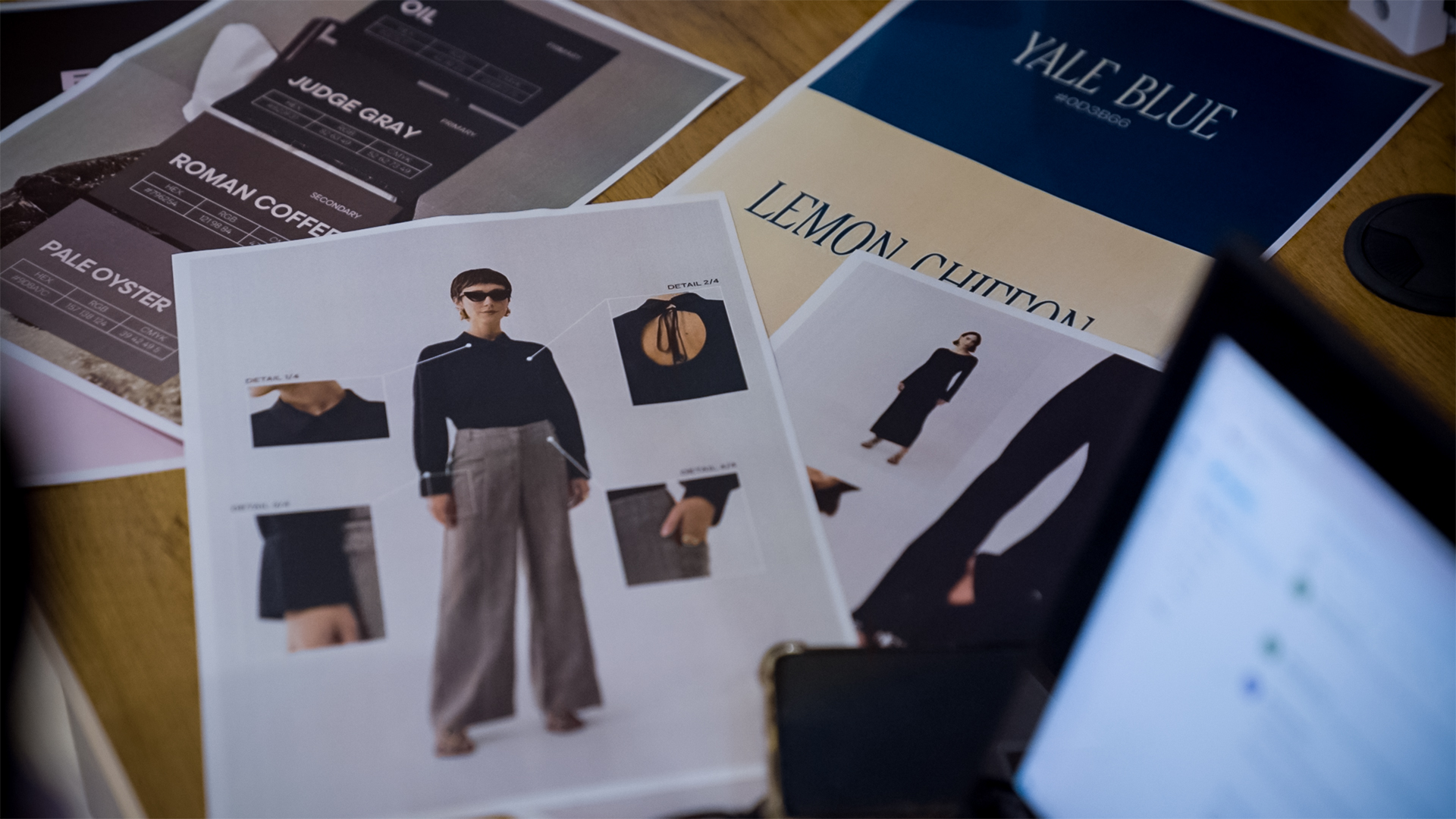
Visual Language: Colors and Patterns: Colors evoke emotions. Minimalist neutrals may tell a story of timeless sophistication, while bold patterns reflect youth and rebellion.
Craftsmanship and Process: Handmade details and local artisan collaborations add authenticity to the narrative.
Case Example: Canadian Storytelling in Fashion
- Kotn: Ethical cotton sourcing and empowering farming communities.
- Indigenous Fashion Week Toronto (IFWTO): Reclaiming identity and heritage.
- Frank And Oak: Modern urban life blended with eco-conscious living.
Our Role as Storytelling Partners in Design
At Rabia Dastgir Design Consultants, we help brands turn fabric into narrative by:
- Shaping brand narratives: Translating purpose into stories that connect.
- Curating meaningful inspirations: Sourcing ideas from cultural heritage to digital innovation.
- Guiding material choices: Choosing fabrics that reinforce your specific message.
- Creating a holistic brand experience: Extending the story to packaging and visuals.
“At Rabia Dastgir Design Consultants, we help turn your fabric into a brand-defining story. Let’s design apparel that speaks louder than words.”
What the Future Holds
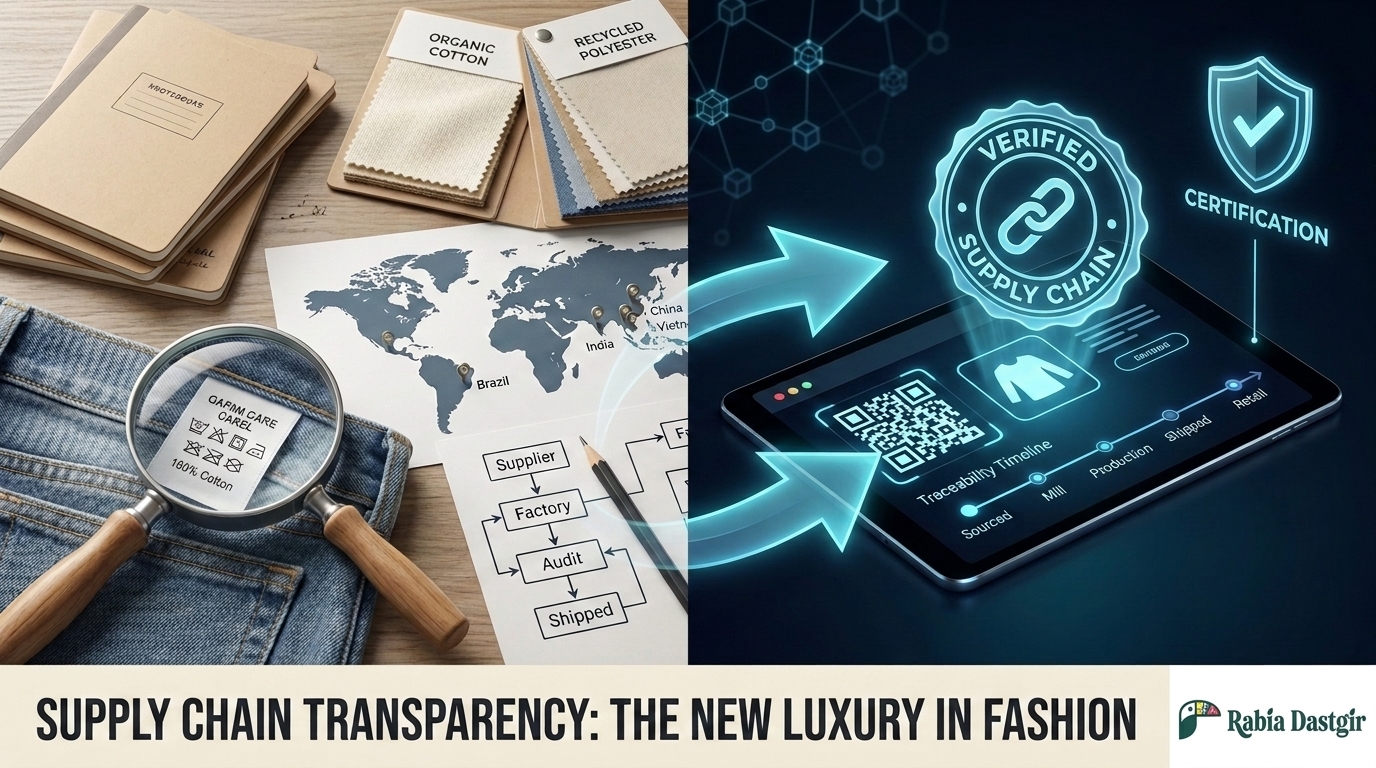
As fashion consumers demand transparency, storytelling will become the ultimate differentiator. The next wave of apparel leaders will weave powerful narratives that stand for identity, inclusivity, and sustainability.