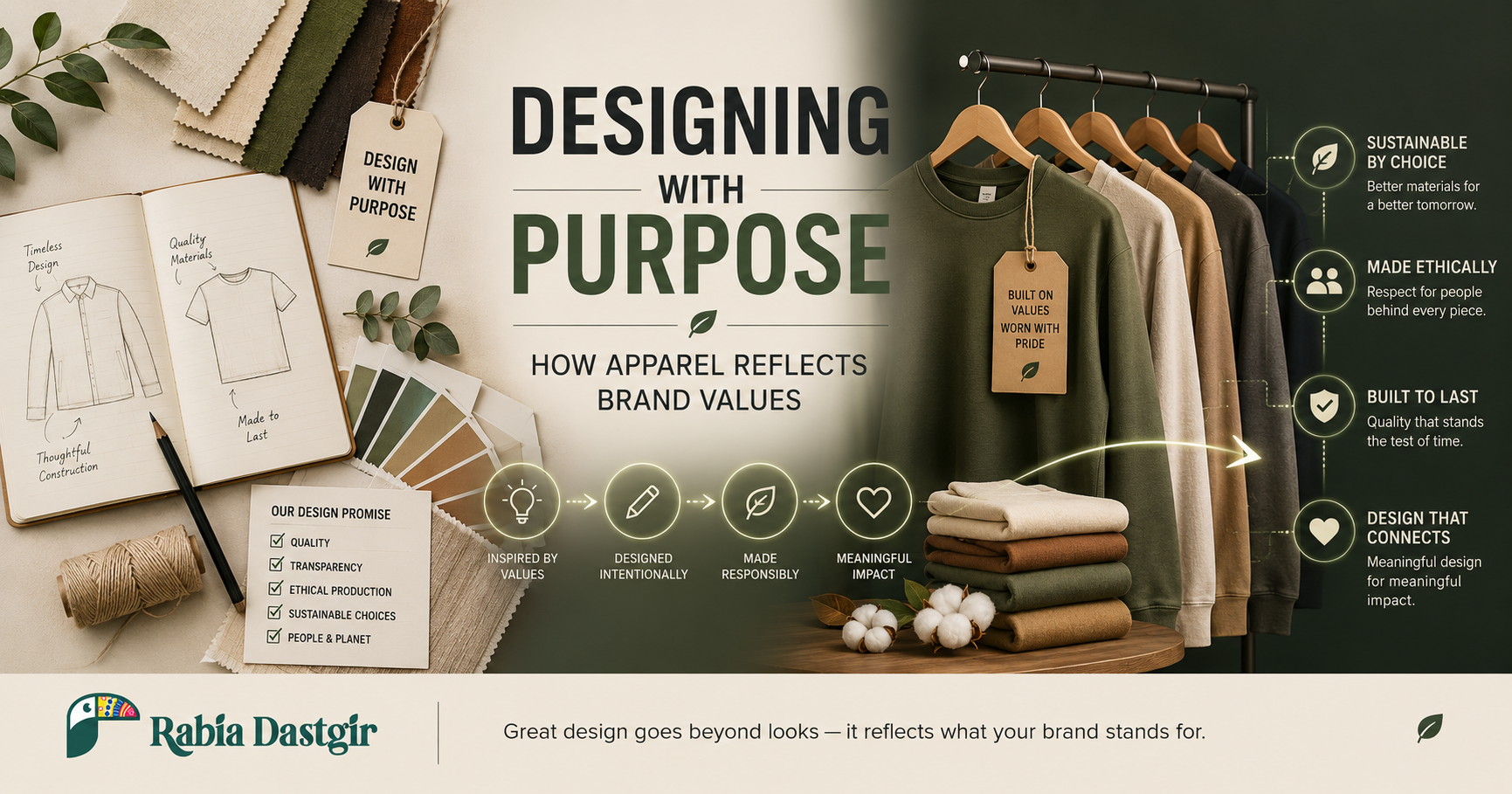
Designing with Purpose — How Apparel Reflects Brand Values
Fashion has always been about expression — but in today’s market, purpose-driven apparel design is what separates brands that last from brands that fade. Consumers no longer choose a brand solely for how clothes look. They choose based on what a brand stands for — its materials, its makers, its values, and its impact on the world.
From sustainability and inclusivity to transparency and local craftsmanship, apparel has become a visual language for conviction. At Rabia Dastgir Design Consultants (RDDC), we believe every design decision should reflect what a brand actually stands for — not just what it sells.
Designing with purpose means aligning aesthetics with ethics, and creativity with conscience.
Why Purpose Matters in Fashion
1. Value Alignment Builds Trust
Modern consumers are making more informed purchase decisions than ever before. According to a 2024 PwC Global Consumer Insights survey, 80% of consumers say they are willing to pay a premium for sustainably made products. When a brand’s values mirror their own — whether it is cruelty-free production, eco-friendly materials, or fair wages — trust converts into loyalty.
A T-shirt made from organic cotton is not just softer on the skin. It is softer on the planet, and that difference is visible to customers who are paying attention.
2. Ethical Design Is the New Luxury
Luxury used to mean exclusivity. Today, it means integrity. Brands like Stella McCartney and Gabriela Hearst have redefined high-end fashion by leading with purpose — proving that ethics and elegance are not mutually exclusive. The premium is no longer in the label. It is in the story behind the garment.
3. Purpose Differentiates in a Copycat Market
Trends fade fast. Values are harder to copy. When thousands of brands chase the same aesthetics, the ones rooted in a clear ethical stance stand out — not because they look different, but because they mean something different. Brands with clear values are simply harder to replicate.
How to Build Purpose-Driven Apparel Design
Material Ethics
Every fabric carries meaning. The materials a brand selects say something before the customer even reads the label:
- Organic cotton speaks of purity and environmental care.
- Recycled polyester signals innovation and responsibility.
- Artisan textiles reflect heritage and human connection.
At RDDC, we help brands make material choices that embody their principles — ensuring fabrics communicate intent, not just texture.
Inclusive Sizing and Representation
Purpose-driven apparel design embraces every body, shape, and identity. Inclusivity is not a marketing strategy — it is a design philosophy. Brands that build size ranges, diverse visual representation, and accessible pricing into their core process are not doing a favour to their customers. They are doing their job properly.
Local Empowerment
Partnering with local artisans or regional producers supports communities while preserving cultural craftsmanship that mass production erases. These collaborations produce garments with provenance — and a story worth telling.
Case Study: Patagonia & Tentree
Two brands proving that apparel can be activism.
Patagonia — its mission, “We’re in business to save our home planet,” is not a tagline on a website. It guides every decision — from fabric sourcing and manufacturing standards to their Worn Wear repair programme. Patagonia has donated 1% of sales to environmental organisations since 1985, and in 2022 transferred its entire $3 billion ownership structure to a trust and non-profit to lock that mission in permanently.
Tentree — for every item sold, ten trees are planted. As of 2026, Tentree has planted over 110 million trees across 14 countries. Their apparel is the funding vehicle. The trees are the product. That clarity of mission — built directly into the business model — is what turns customers into advocates.
Both brands have turned purpose into a product. Both built communities that did not need a loyalty programme — because the mission itself was reason enough to stay.
Our Role in Purpose-Driven Design
At Rabia Dastgir Design Consultants, we translate brand values into tangible, wearable experiences. Here is what that looks like in practice:
- Building brand narratives that merge storytelling with design ethos — so your collection communicates what you believe before the customer reads a single word of copy.
- Selecting materials that reflect environmental and ethical alignment — not just what is available or affordable.
- Designing inclusively, ensuring representation across silhouettes and visuals.
- Creating holistic brand identities — where apparel, packaging, and presentation echo one unified purpose.
We do not just help brands look good. We help them mean something.
What the Future Holds
As climate awareness and social equity move from niche concerns to mainstream buying criteria, purpose-driven apparel design is no longer a differentiator. It is becoming the baseline.
The brands that will lead the next wave of apparel innovation are not the ones with the biggest production budgets. They are the ones with the clearest sense of what they stand for — and the discipline to build that conviction into every product decision.
Frequently Asked Questions
What is purpose-driven apparel design?
Purpose-driven apparel design is the practice of aligning a brand’s materials, manufacturing, and visual identity with its core ethical values — from fair wages and eco-friendly fabrics to inclusive sizing and cultural storytelling. It goes beyond aesthetics to ensure every design decision reflects what the brand actually stands for.
How do fashion brands show their values through clothing?
Brands communicate values through material choices (organic cotton, recycled fibres), production transparency (certified supply chains, artisan partnerships), inclusive sizing, and consistent brand storytelling across product, packaging, and presentation.
What materials reflect sustainable brand values in apparel?
Organic cotton, recycled polyester, TENCEL™, hemp, and deadstock fabrics are among the most commonly used sustainable materials. Each signals a different set of values — from environmental responsibility to innovation and cultural heritage — and should be chosen based on what the brand genuinely stands for.
Why is inclusive design important in purpose-driven fashion?
Inclusive design ensures that a brand’s values are reflected in who the product is made for. Brands that limit sizing, representation, or accessibility contradict purpose-driven positioning regardless of how sustainable their materials are. True purpose extends to the end customer.