Transparency Is the New Luxury: Why Supply Chain Visibility Sells
Introduction
Once, luxury was defined by secrecy — the hidden ateliers in Paris, the discreet sourcing, the guarded mystique behind the brand name. But the rules of the game have shifted. Today, the most valuable form of luxury isn’t mystery, it’s openness.
Consumers no longer buy only a product; they buy a narrative, a set of values, and a relationship of trust. The question “Who made my clothes?” has become as important as how well they fit or what they cost. For modern consumers — particularly Gen Z and Millennials — the origin of a garment can elevate it from a simple purchase to a statement of identity.
And here’s the critical insight: brands that offer supply chain visibility are not just protecting themselves from reputational risk — they’re creating a competitive advantage. Transparency has become the ultimate luxury feature.
At Rabia Dastgir Design Consultants, we believe supply chain visibility should not be hidden in reports — it should be woven into the customer journey.
Why Transparency Drives Purchasing Decisions
- Credibility: Consumers distrust vague labels. Specific origins, certifications, and data build credibility.
- Differentiation: In saturated markets, transparency is a unique selling proposition that competitors can’t copy overnight — a theme we explore further in Beyond Greenwashing: Building Authentic Sustainable Fashion Brands That Last.
- Risk mitigation: Visibility reduces vulnerability to scandals; early detection enables rapid response.
- Regulatory readiness: Legislation is moving toward supply-chain reporting — the EU’s Ecodesign for Sustainable Products Regulation already lays the legal groundwork for mandatory product-level disclosure — so transparency future-proofs brands.
Practical Transparency Tools
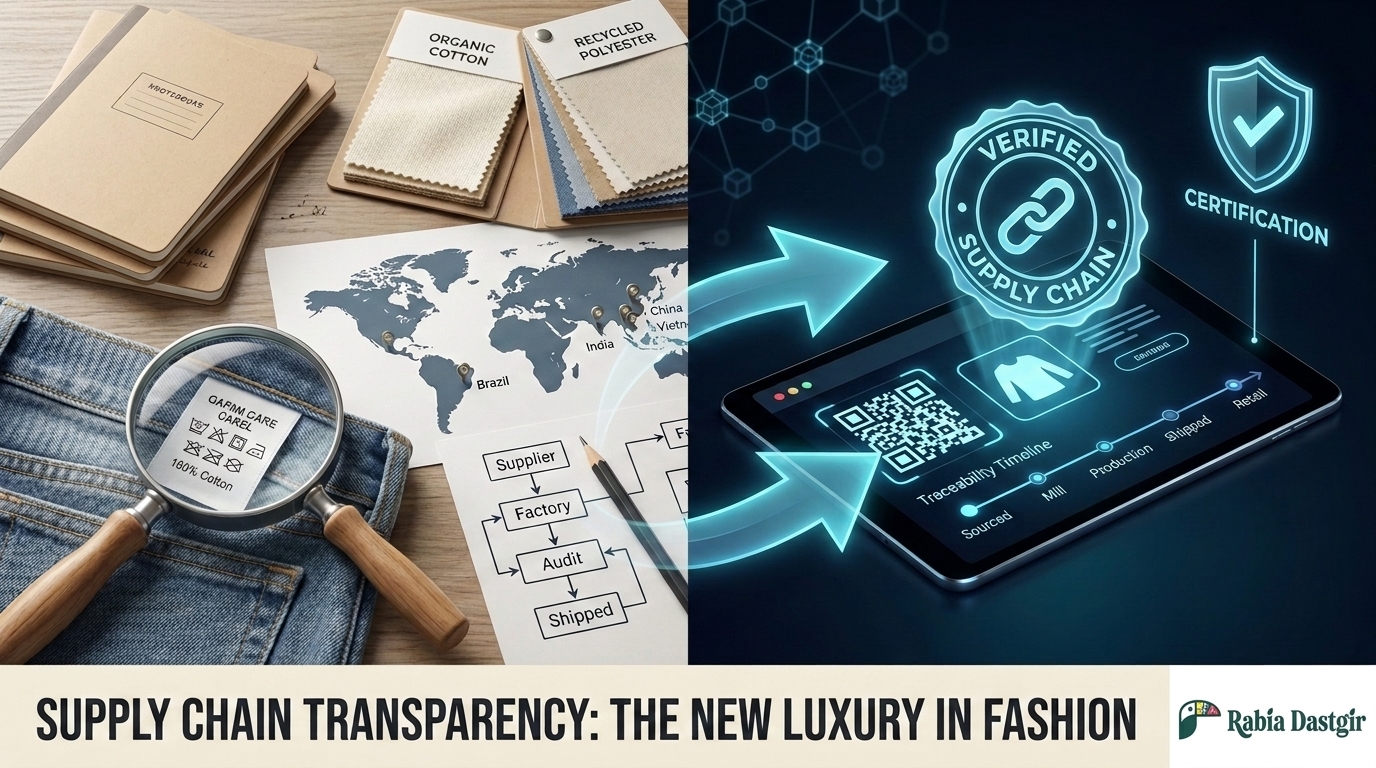
- Digital Product Passports: Embed a digital record containing material composition, factory info, and repair history. These become powerful in resale and recycling ecosystems.
- Blockchain: Immutable ledgers provide tamper-resistant provenance for high-value items.
- QR Codes: A simple consumer-facing touchpoint to reveal sourcing, certifications, and journey videos.
- Third-party audits & certifications: GOTS, Fair Trade, and SMETA provide independent verification that can be communicated to customers.
How to Start — Step-by-Step
- Map your suppliers: Start with tier-1 and move upstream; transparency begins with clarity inside operations.
- Set disclosure policies: Decide what to publish and how to protect legitimate IP.
- Pilot visible products: Launch a single SKU with full disclosure to test consumer response and operational processes.
- Educate customers: Transparency needs a narrative. Explain why certain choices were made and how customers can engage (e.g., repairs, take-backs) — see The Art of Storytelling in Apparel Design for how to turn sourcing decisions into brand narrative.
Case Examples That Illustrate the Value
- Brands that publish factory photos and worker stories report higher perceived authenticity and better customer retention.
- Products with digital passports have higher resale values because buyers can verify provenance — a natural extension of the circular models we cover in The Future of Circular Fashion.
Common Obstacles & Mitigation
- Supplier resistance: Build trust, offer supplier premiums for increased disclosure, and start with voluntary pilots.
- Data fragmentation: Invest in centralized data platforms or partner with traceability vendors — the same data discipline behind Data to Decisions: Unlocking the Power of Predictive Analytics.
- Over-disclosure risk: Balance transparency with IP protection — disclose what matters to consumers.
How RDDC Helps Brands Implement Transparency
- Supply chain audits: We map and verify supplier practices and identify priority gaps through our Business Advisory & Strategy services.
- Communication design: We translate technical data into consumer-friendly narratives and QR flows.
- Tech partnerships: We connect brands with digital passport and traceability providers and design pilots that validate ROI, informed by our work in Apparel Design & Production.
Future Outlook
Transparency will be normalized across categories. What’s now a differentiator will soon be expected. Early adopters will not only comply with incoming regulations but will own the narrative and capture customer loyalty.
Transparency is no longer optional marketing — it’s premium currency. If your brand wants to convert visibility into trust and profit, RDDC can help you map, disclose, and tell your story authentically.
👉 Reach out to Rabia Dastgir Design Consultants to start your transparency roadmap.